2005 Nissan GT-R Proto: From Tokyo Motor Show Prototype to R35 Legend – The Ultimate Used GT-R Buying Guide
October 2005: The Night Godzilla Was Born Again
October 2005. The Makuhari Messe in Chiba, Japan, is buzzing with the controlled electricity that only the Tokyo Motor Show can generate. Camera flashes strobe like lightning across a convention floor packed wall-to-wall with journalists, engineers, and wide-eyed enthusiasts. Then the lights shift — and the room collectively stops breathing.
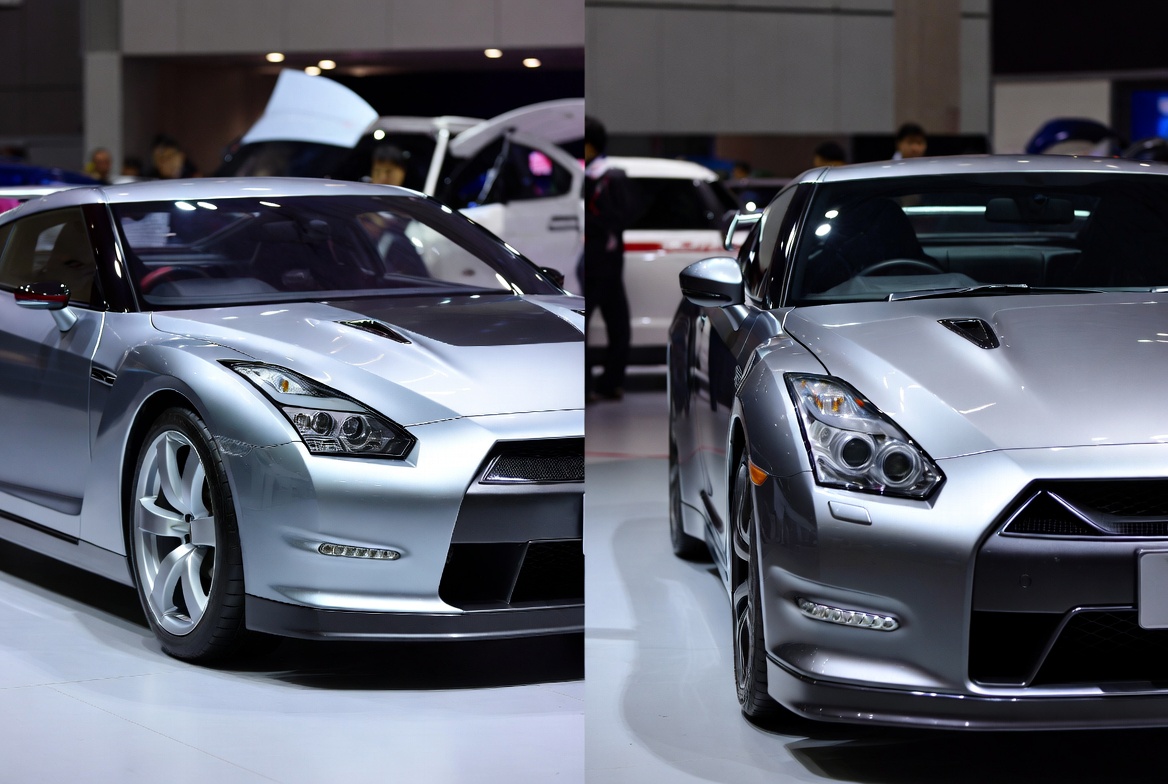
The 2005 Nissan GT-R Proto sits under a single spotlight, draped in deep metallic silver, its flanks carved with such aggressive intent that it barely looks like something a committee could have approved. It is wide. It is angular. It is angry in the best possible way. And it is unmistakably a GT-R.
For everyone who grew up pinning R32 Skyline posters to their bedroom walls, who memorized the lap times of the R34 at the Nürburgring, who felt the hollow ache when production ended in 2002 — this moment was almost too much. The GT-R Proto prototype wasn’t just a concept car. It was a manifesto written in sheet metal and carbon fiber. Every vent, every crease, every aerodynamic surface sent one crystal-clear message: Godzilla is coming back, and it is coming back harder.
What unfolded over the next two years — from that electrifying Tokyo debut through the production R35’s official launch in December 2007 — is one of the most deliberate, passionate engineering and design stories in modern automotive history. Understanding that story isn’t nostalgia tourism. It fundamentally changes how you see, value, and ultimately feel an R35 GT-R today.
Whether you’re a hardcore historian cataloguing every Proto detail or a buyer actively hunting your first R35, the DNA of the GT-R Proto is encoded into every production car that rolled off the Tochigi line. Finding a used R35 in Los Angeles that still carries the true Proto spirit is easier than you think today. But first, let’s go back to where it all began.
The Birth of the Proto: How Nissan Designed a Legend in Two Years
The GT-R Proto didn’t materialize out of thin air. It was the product of years of internal debate, careful stakeholder management, and the relentless passion of a design and engineering team that refused to let the GT-R nameplate become a memory.
After the R34 Skyline GT-R ceased production in 2002, Nissan had left an enormous void — not just in their performance lineup, but in the identity of Japanese sports car culture worldwide. The question was never if the GT-R would return. It was what it would return as.
The internal mandate handed down by Nissan leadership was genuinely radical: the new GT-R would not be a Skyline. It would stand completely alone — a world-class supercar that happened to be born in Japan, engineered to compete with Ferrari and Porsche on their own terms, at roughly half the price. That philosophical anchor shaped every subsequent decision.
Shiro Nakamura, Nissan’s Senior Vice President of Design at the time, oversaw the creative direction of what would become the Proto. His directive was pure and uncompromising: create a shape that looks like it was carved by physics itself. The designers responded with a concept that drew from motorsport aerodynamics, Japanese minimalist tension, and the aggressive muscle of classic American muscle cars — a genuinely unique synthesis.
The GT-R Proto revealed at the 39th Tokyo Motor Show in October 2005 was specifically designed to test global media and public reaction. Nissan needed to know whether the world was ready for this level of visual aggression. The answer came back an unambiguous, thundering yes.
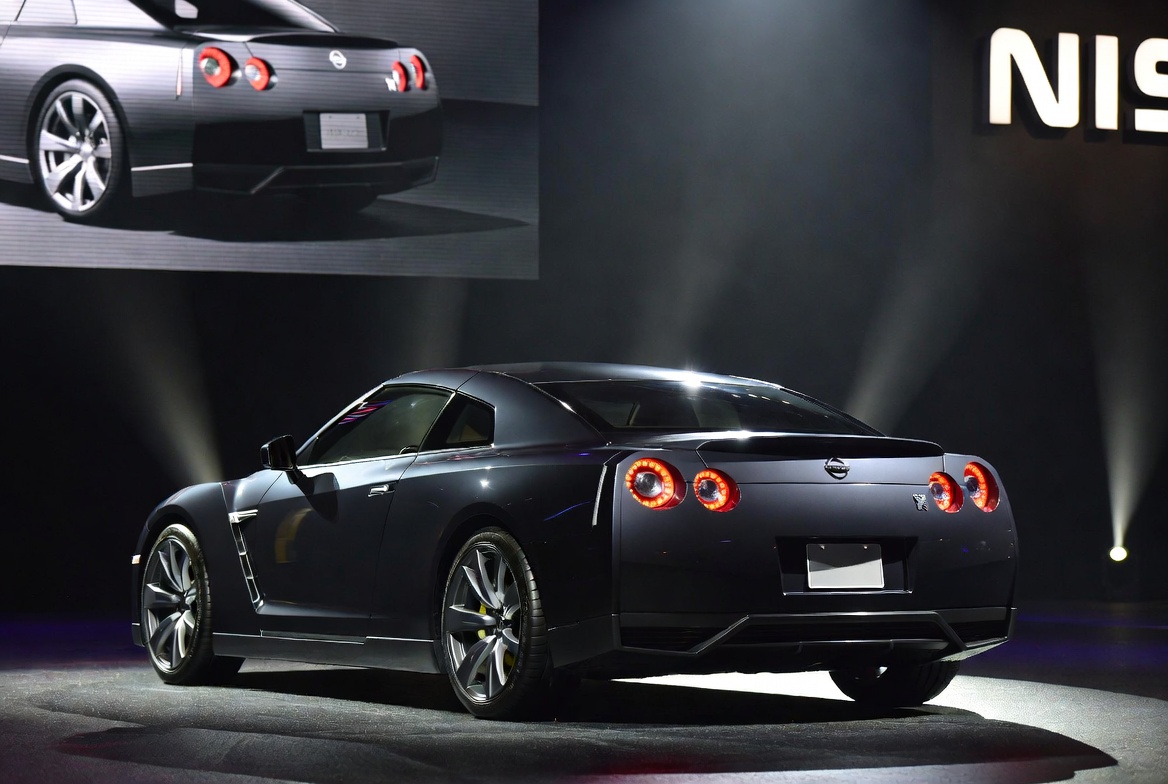
Key to the Proto’s character were its squared-off rear haunches, prominent hood vents that referenced functional racing bodywork, and a rear treatment more dramatic than what would survive into production. The quad round taillights were a deliberate, knowing callback to the R32 and R34 generations — a wink to the faithful while simultaneously leaping into an entirely new era.
Between 2005 and 2007, Nissan’s engineers logged extraordinary test distances across the Nürburgring Nordschleife in Germany, the Miyoshi Proving Ground in Japan, and the Nevada desert. The production R35, which debuted at the 40th Tokyo Motor Show in October 2007 and went on sale December 6, 2007, retained the Proto’s spiritual core while being validated for real-world ownership.
Designers subtly softened the rear, refined the headlight graphic treatment, and optimized aerodynamic surfaces for genuine downforce efficiency. But the Proto’s fundamental DNA — the wide-body aggression, the double-bubble roofline, the purposeful four-exhaust pipe exit — survived completely intact, translated faithfully into a car you could actually buy.
The GT-R prototype history is a contract with the enthusiast community, signed in concept car form in 2005. Nissan delivered on every clause.
Black Tech & Performance: The Engineering Soul Behind the Proto Bloodline
What made the 2005 GT-R Proto concept so technically significant wasn’t just the dramatic bodywork — it was what Nissan was hinting at underneath. By the time that show car rolled onto the Tokyo Motor Show floor, the engineering team had already committed to a fundamental architecture that would define the R35 for decades.
The VR38DETT: A Purpose-Built Heart
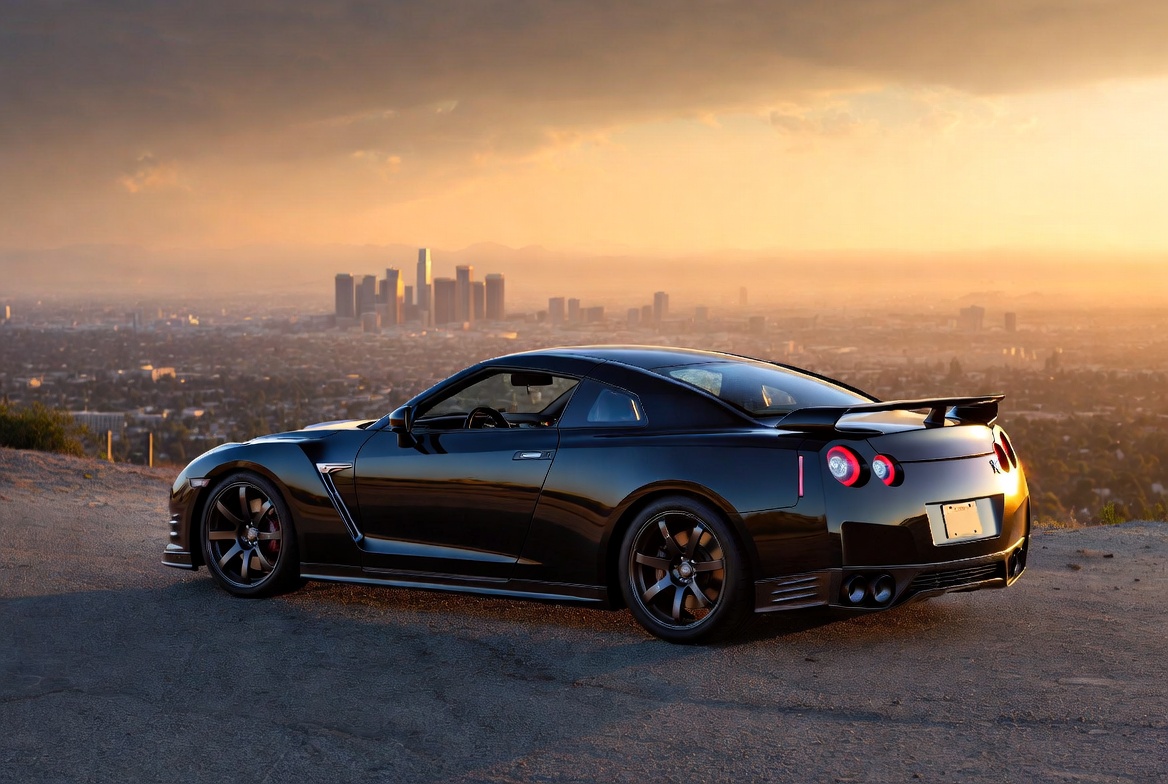
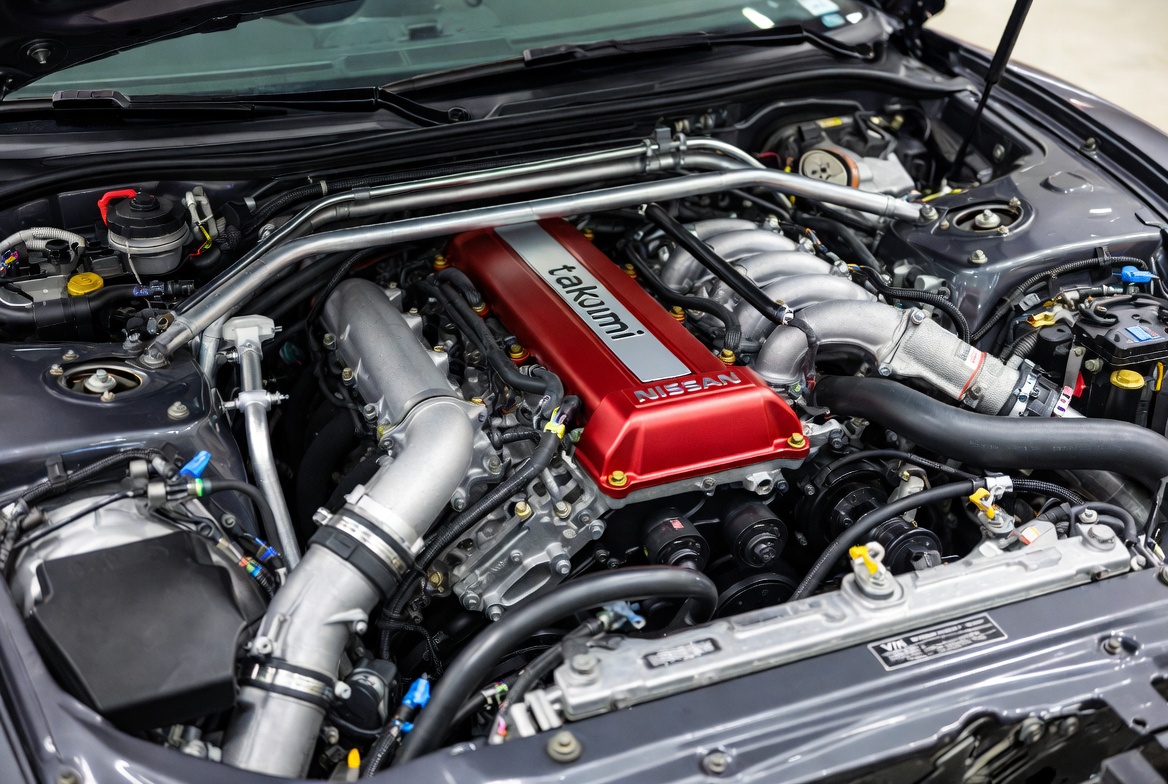
The R35’s engine — the twin-turbocharged 3.8-liter V6 VR38DETT — was in advanced development throughout the Proto era. Featuring dual parallel twin-scroll turbochargers, plasma-transferred wire arc (PTWA) cylinder bore coating, and dry-sump lubrication, this engine was engineered from day one for extreme, sustained performance.
Initial production specification produced 480 PS (473 hp) and 588 Nm (434 lb-ft) of torque — figures that cleanly dispatched cars costing two or three times as much. Every single VR38DETT is hand-assembled in a temperature-controlled clean room by a single designated technician. That individual’s nameplate is affixed directly to the finished engine. Craftsmanship as a philosophy, not a marketing talking point — and it was baked into the car’s identity during the Proto development years.
ATTESA E-TS Pro: AWD Redefined
The GT-R’s ATTESA E-TS Pro all-wheel-drive system was the chassis secret weapon behind the prototype’s performance promise. Unlike conventional AWD systems that reactively redistribute power after detecting slip, the GT-R’s system uses real-time computer modeling to proactively manage torque distribution based on throttle input, steering angle, lateral G-force, and yaw rate data processed simultaneously.
In practice, the system can vector up to 100% of torque to the rear axle for driver-engaging dynamics, or distribute power forward in milliseconds for maximum traction. This sophistication is precisely what enabled the legendary Nürburgring Nordschleife lap time of 7 minutes 38 seconds recorded in 2008 — a result that stunned the supercar world.
Aerodynamics: Form Follows Downforce
Nothing on the GT-R Proto’s body was decorative. Hood vents reduce front-end lift at speed. The rear diffuser — first telegraphed visually on the Proto — generates genuine, measurable downforce. The flat underbody manages airflow to reduce drag while maintaining high-speed stability past 300 km/h (186 mph). Carbon fiber roof, hood, and decklid treatments on Nismo and premium specification models draw directly from the weight-reduction philosophy embedded in the Proto’s original design brief.
Braking and Chassis Mastery
Brembo six-piston front calipers gripping 380mm cross-drilled rotors were specified during the Proto development phase. Bilstein DampTronic suspension provides driver-selectable damping across Comfort, Normal, and Sport modes — soft enough for LA traffic, savage enough for a track day at Willow Springs.
The launch control system became legendary almost immediately. Executed correctly, a stock GT-R produces 0–60 mph in approximately 2.8 seconds — a figure that remained competitive against Lamborghinis and Ferraris for years. When Australian automotive journalists first drove development mules in 2007, they coined the nickname “Godzilla” without hesitation.
It fit perfectly. It still does.
Why the Proto Bloodline Makes a Used R35 More Valuable in 2026
Understanding the GT-R Proto isn’t just a historical exercise. It’s a framework for understanding why R35 GT-Rs hold their value better than almost any other used Japanese performance car on the market today — and why the landscape for R35 used cars in 2026 remains remarkably strong.
Value Retention That Defies Conventional Wisdom
When the R35 GT-R launched in the US market for approximately $69,850 USD in 2008, most analysts projected a standard depreciation curve. What happened instead was extraordinary. Clean, low-mileage examples in 2026 regularly command $60,000–$90,000, and desirable early model years or Nismo specifications routinely breach six figures. For a nearly 20-year-old platform, that retention is almost without parallel in the modern sports car segment.
The reason is directly traceable to the Proto. Nissan framed the R35 from the very beginning — from that 2005 concept debut — as a culturally significant object, not merely a fast car. That narrative became self-fulfilling. Buyers psychologically process a used GT-R as a collectible asset, and the market responds accordingly.
The Modification Ecosystem: Making Proto Dreams Real
One of the most compelling dimensions of owning an R35 in 2026 is the extraordinary aftermarket ecosystem the platform has developed. Every high-flow turbo upgrade, every fuel system improvement, every R-Tune ECU calibration is an extension of the performance narrative Nissan first wrote in concept form in 2005. The VR38DETT’s architecture is famously robust — documented builds pushing 1,000+ horsepower on upgraded internals are not exotic territory.
This modification potential directly impacts used GT-R market value. Tastefully built cars with documented, reputable shop work frequently carry premiums over stock examples, because the buyer community understands what those modifications represent.
The Intangible Premium
There is a quality to driving an R35 that no specification sheet fully captures. A directness and dialogue between car and driver that was clearly intentional during the Proto design phase. The GT-R was never engineered to feel effortless and remote. It was engineered to be engaging, layered, and honest. That irreplaceable character is the emotional dividend of buying into this lineage.
For buyers who understand this GT-R prototype history, the value proposition of a well-maintained used R35 speaks for itself. When Proto-bloodline cars carry this kind of premium, provenance is everything.
Los Angeles Used GT-R Buying Guide: What to Inspect Before You Buy
Southern California represents one of the strongest markets in the world for sourcing a Los Angeles used GT-R in 2026. The dry climate eliminates rust concerns that haunt East Coast examples. A dense enthusiast community supports a strong culture of proper maintenance. And the concentration of qualified Nissan specialists and independent GT-R shops makes pre-purchase inspections straightforward to arrange.
Here are the four non-negotiable checkpoints before you sign anything:
1. Transmission and Transaxle Health
The GR6 dual-clutch transaxle is a brilliant piece of engineering, but it is expensive to rebuild or replace. Check for jerking at low-speed maneuvering, hesitation on initial engagement, or transmission fluid that appears dark or smells burned. Request all transmission fluid service records — this is the single most consequential maintenance line item on the R35 platform.
2. Launch Control Abuse History
Ask directly and specifically whether launch control has been used with any regularity. Repeated LC activations with cold fluids accelerate wear on drivetrain components significantly. A Consult III+ diagnostic scan will surface logged fault codes that reveal the truth even when sellers prefer vagueness.
3. Turbos and Engine Oil Analysis
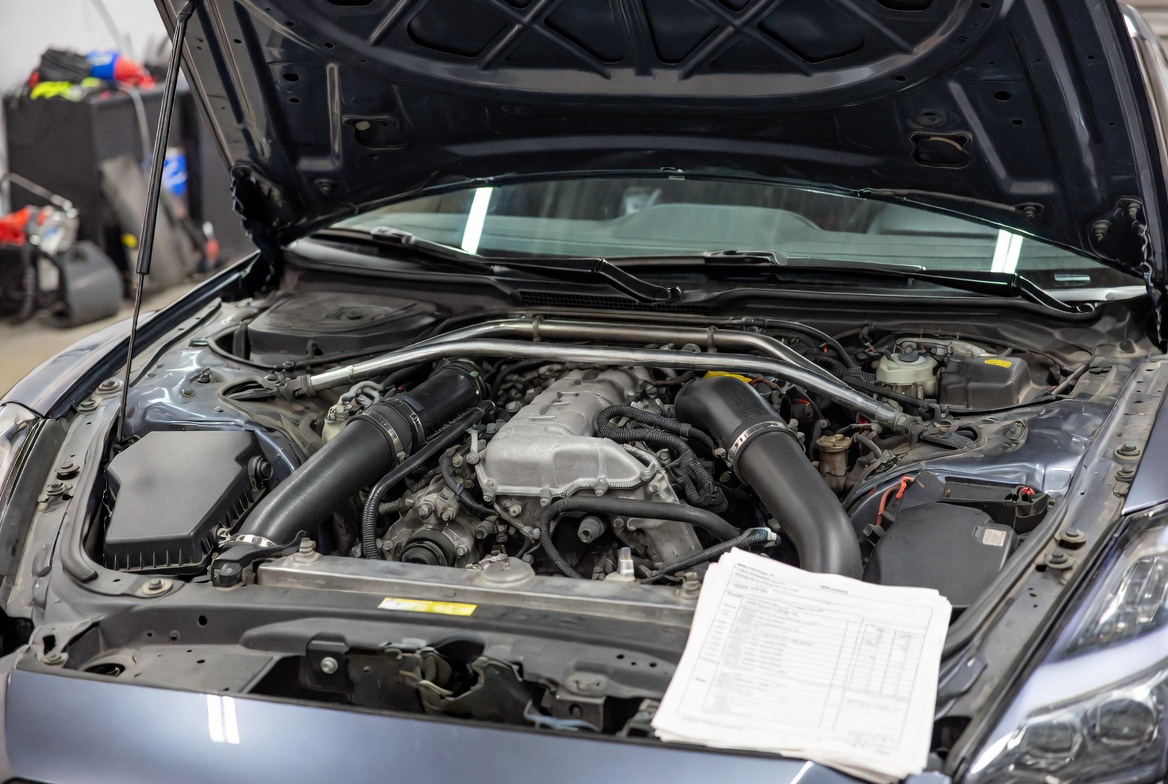
On higher-mileage VR38DETTs, inspect intake plumbing junctions for oil residue and request any available used oil analysis records. Turbocharger shaft play is detectable by a qualified technician and should be checked before any purchase commitment.
4. Service History Continuity
A genuine GT-R service record shows oil changes at 3,750-mile intervals, regular transmission fluid services, and documented cooling system maintenance. Gaps in that record are meaningful red flags — this platform rewards obsessive maintenance and punishes neglect.
Work with Specialists, Not Generalists
When purchasing from a dedicated GT-R specialist, thorough inspections and reconditioning are built into the acquisition process. Always request the full inspection report, ask specifically about prior modifications, and verify the modification documentation chain. Honest, knowledgeable dealers will provide all of this without hesitation.
Own a Piece of the Legend
The story of the 2005 Nissan GT-R Proto is ultimately the story of brilliant, stubborn people refusing to accept compromise. It’s the story of a design and engineering culture betting everything on a singular, uncompromising vision — and winning in spectacular fashion at the grandest possible stage, the Tokyo Motor Show floor.
Every R35 GT-R that exists today is the physical realization of that vision. When you sit in one, grip the flat-bottomed steering wheel, and feel the ATTESA system read the road beneath you — you are experiencing the direct translation of what those designers and engineers first sketched in 2003 and revealed to the world in 2005.
If you’ve read this far, you already understand what makes a GT-R different from every other fast car. You don’t just want to admire one from a distance. You want to own the right one — a car with clean history, honest documentation, and the mechanical integrity that honors what Nissan’s Takumi engineers poured into this platform.
The GT-R community in Los Angeles is active, deeply knowledgeable, and genuinely welcoming. Tap into it. Get your prospective purchase professionally inspected. Understand and respect the history you’re buying into.
And when you’re ready to find your R35, start where serious Los Angeles GT-R buyers start. Their inventory is curated with the same obsessive attention to detail that Nissan’s team brought to the GT-R Proto two decades ago. That’s not a coincidence. That’s the standard the platform demands.
Godzilla is waiting. Go find yours.
Frequently Asked Questions
What are the main differences between the 2005 GT-R Proto and the production R35?
The GT-R Proto concept, revealed at the 39th Tokyo Motor Show in October 2005, was a design-intent study built to gauge global reaction and signal the GT-R’s return. It featured more dramatic styling than the eventual production car — including a sharper, more theatrical rear fascia treatment, more deeply sculpted venting channels, and slightly different rear lamp graphic execution. The production R35, which debuted at the 40th Tokyo Motor Show in October 2007 and went on sale December 6, 2007 in Japan, retained the Proto’s core proportions, quad taillights, wide-body stance, and double-bubble roofline, while refining aerodynamic surfaces for validated real-world performance and incorporating production-feasible manufacturing details.
How many miles is too many for a used R35 GT-R?
Mileage alone is a less reliable metric than service history continuity and inspection results. A 60,000-mile car with documented oil changes every 3,750 miles, complete transmission fluid service records, and no track or launch control abuse history is significantly preferable to a 25,000-mile example with incomplete paperwork and evidence of hard use. The VR38DETT engine is fundamentally strong when properly maintained. Prioritize documentation and a pre-purchase mechanical inspection by a qualified GT-R technician over raw mileage numbers.
Are used R35 GT-Rs appreciating in value in 2026?
Clean, well-documented R35 GT-Rs — particularly early MY2009–2012 examples and Nismo specification cars — have demonstrated strong and consistent value retention as the platform matures toward classic sports car status. They are not guaranteed financial instruments, but among used Japanese performance cars, the GT-R’s trajectory is notably resilient. Modification history from reputable shops, complete service documentation, and original-color paint are the factors that most strongly influence premium pricing in the current market.
Where is the best place to buy a used GT-R in Los Angeles?
Working with a dealer who specializes in performance GT-R inventory — or who dedicates significant resources to proper GT-R acquisition and inspection — is strongly recommended over general used car lots. Generalist dealers rarely have the technical expertise, inspection infrastructure, or documentation standards that GT-R buyers require.