Nissan GT-R Proto vs Production R35: Key Differences That Shaped the Legend
Hero Introduction
I still remember the electricity in that hall. The 2005 Tokyo Motor Show had no shortage of spectacular machinery, but when Nissan pulled the covers off the GT-R Proto, everything else stopped mattering. I’d been following the development rumors for months — obsessing over leaked sketches, parsing Kazutoshi Mizuno’s carefully worded interviews, chasing every shred of information I could find. And even with all of that, nothing fully prepared me for what stood on that stage.
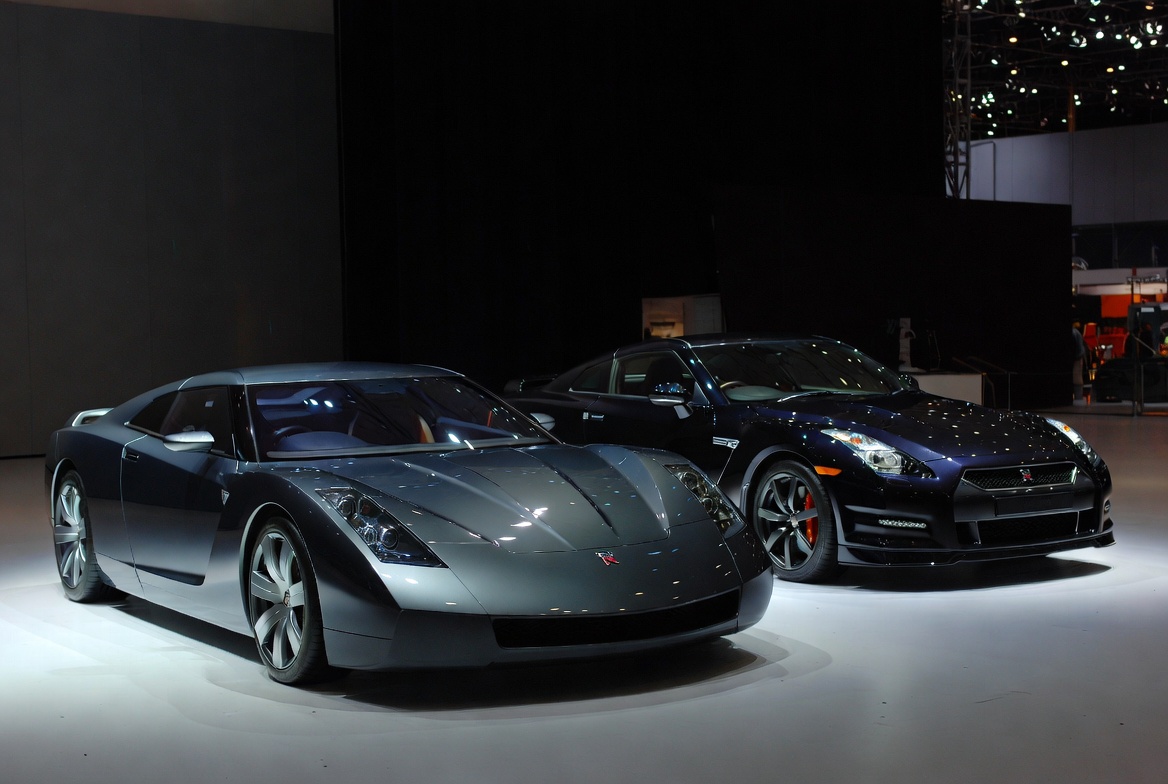
The GT-R Proto was unmistakably a GT-R. Those stacked quad headlights nodded directly to the R32, R33, and R34 Skylines. That wide-hipped, planted stance was pure Godzilla DNA. But it was also something brutally new — something that looked like it had dragged a JGTC race car into the design studio and started asking very hard questions.
The crowd reaction was visceral. This wasn’t another concept car destined to be forgotten by January. The GT-R Proto felt like a promise. And unlike most automotive promises, Nissan kept it.
Two years later, when the production R35 rolled into Japanese showrooms in December 2007, the enthusiast world exhaled — and immediately started arguing. What had Nissan actually kept from the Proto? What changed, and why? Were those changes compromises driven by manufacturing reality, or genuine improvements discovered during development? Every forum thread, every paddock conversation, every side-by-side photo comparison led back to the same question: what is the actual relationship between that Tokyo show car and the machine you can buy and drive?
That question is still worth asking in 2026. Especially now. With nearly two decades of real-world R35 ownership data, track experience, and hard-earned hindsight available to us, we can look at the Proto’s design choices and the production decisions that followed with real clarity. We can understand the why behind each change — and what those decisions mean for anyone living with an R35 today.
This is for the people who don’t just want to know what Nissan changed. They want to know why. Let’s get into it.
Exterior Design Changes
At first glance, the GT-R Proto and the production R35 look like near-twins. That was entirely deliberate. Nissan’s design mandate was clear: the production car had to honor the show car’s promise, not walk it back. But spend real time with both, study the photography, and the refinements become obvious — and genuinely fascinating.
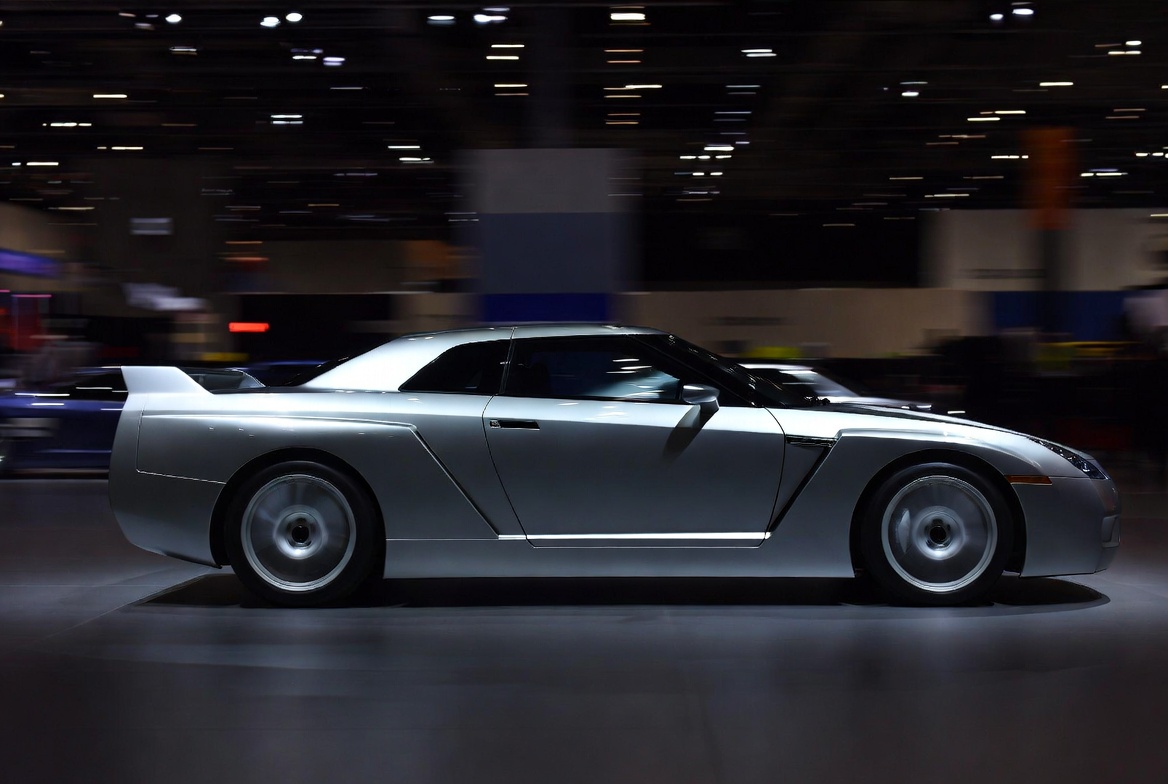
The front end is where the changes are most concentrated. The Proto wore sharper-edged headlight housings — more angular, more confrontational. The stacked quad-lamp signature was present on both, that clear lineage marker connecting the R35 to every Skyline GT-R before it. But the Proto’s lamp surrounds had a harder geometry that, in testing, created unfavorable turbulence along the front corners of the car. For production, Nissan softened those angles slightly — not for aesthetics, but to smooth airflow management around the lamp housings and integrate the front fascia’s considerable cooling requirements more cleanly. It looks like a design choice. It’s actually a fluid dynamics choice.
The hood vents tell a particularly interesting story. On the Proto, the twin outlets sat further forward and ran noticeably wider. The production car repositioned and reshaped them based on finalized engine bay thermal mapping. Nissan’s engineers spent months determining exactly where hot air needed to exit that hood at sustained high speed, under sustained hard use. The vent geometry you see on every production R35 is genuinely functional — not decorative, not a styling homage. It’s solving a real heat problem.
Moving down the sides, the fender vents and side sills both saw meaningful revision. The Proto’s fender vents had a more dramatic, deeply sculpted surround. The production vents are slightly more integrated and flush — better at extracting wheel-well turbulence without compromising side panel rigidity or long-term weatherproofing. The side sills grew slightly in depth, contributing to both aerodynamic channeling under the car and that extra inch of visual ground-hugging drama that photographs so well.
At the rear, the differences are subtler but equally purposeful. The Proto’s taillights had a thinner, more horizontal LED graphic. Production units got a thicker, more distinctive signature — partly for type-approval compliance across multiple markets, partly because it simply read better at distance. The rear diffuser is where things really get interesting. The Proto’s diffuser was aggressive at the sides but somewhat unresolved at the center section. The production car’s diffuser — with its twin-exit exhaust integration — was validated in Nissan’s Atsugi wind tunnel. At 100 mph, it is generating meaningful rear downforce. It’s not theater.
What Nissan kept, fundamentally, was everything that made the Proto feel right: the wide body proportions, the low roofline, the muscular haunch over the rear wheels, and that face. If the Proto was the sketch, the production R35 was the finished painting. Same emotion. Sharper execution.
Engineering & Powertrain Evolution
This is where things get deeply technical and, for a certain kind of enthusiast, deeply exciting. Pull up a chair.
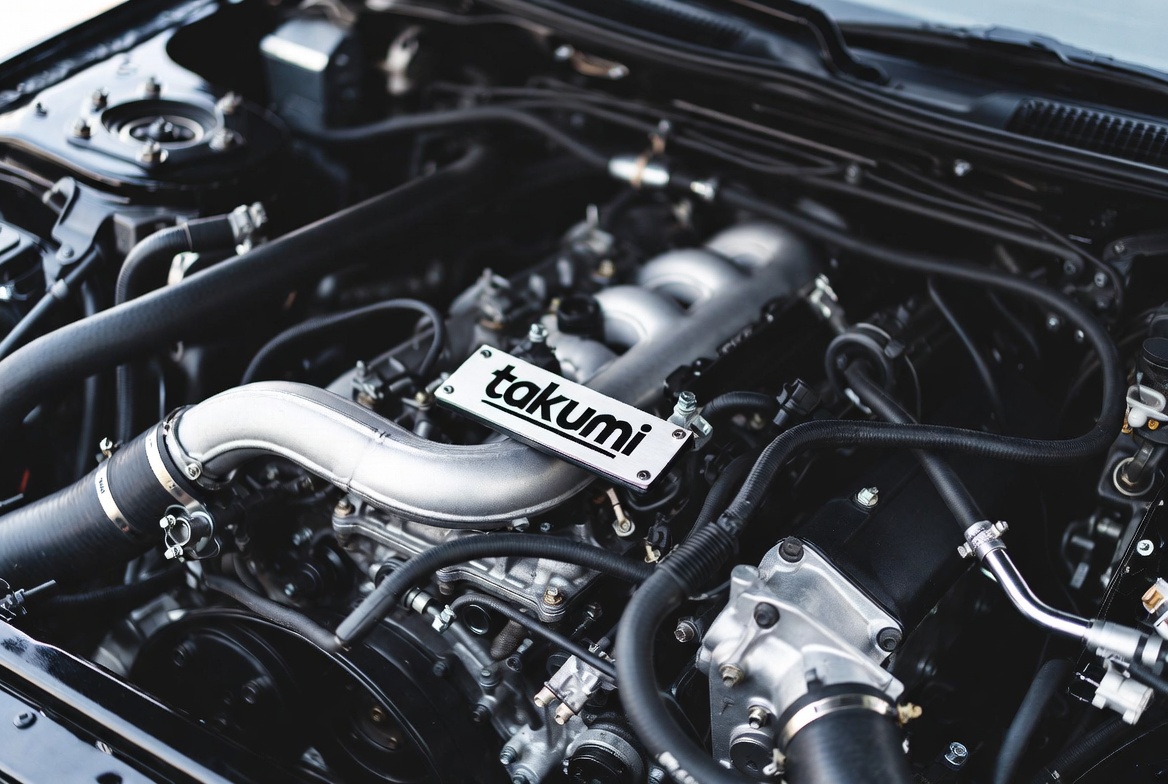
The GT-R Proto used a development mule version of what would become the VR38DETT — twin-turbocharged, 3.8-liter all-aluminum V6, set to be hand-assembled at Nissan’s Yokohama engine facility. But the engine in that Tokyo show car was not the finalized unit. Not remotely. The production VR38DETT that launched with the 2009 model year in North America was rated at 485 hp with 434 lb-ft of torque. JDM spec sat at 480 PS with 588 Nm. Those numbers came after an intensive calibration campaign on the twin IHI ball-bearing turbochargers, the dry-sump lubrication system, and the engine management software — none of which were locked in during the Proto phase.
What really blew my mind, digging into this years later, was the detail Nissan built into the VR38’s final assembly process. Each production engine is built from start to finish by a single takumi craftsperson, who signs a plaque on the finished unit. That system was designed specifically because of what the Proto phase revealed: inconsistencies in the pre-production hand-built engines under repeated high-load use. The takumi assembly method was the engineering answer to achieving race-engine precision at road-car production volumes. It was a response to data, not a marketing story.
The transmission evolution is equally significant — and arguably more consequential for the character of the car. The Proto’s drivetrain used a pre-production version of the GR6 dual-clutch transaxle, but in a configuration that wasn’t yet fully resolved. The key decision — mounting the 6-speed dual-clutch unit at the rear axle in a transaxle layout, physically separated from the engine — had been conceptually established before the Proto debuted, but the engineering execution wasn’t complete. By locating the gearbox at the rear, Nissan achieved a near-ideal 53/47 front-to-rear weight distribution. That’s not marketing copy. That’s hundreds of engineering hours making a packaging layout work that most manufacturers wouldn’t attempt.
The GR6’s launch control calibration was also heavily revised after Proto-stage testing. Development vehicles reportedly exhibited torque spikes during maximum-effort launches that stressed drivetrain components in ways the production system couldn’t tolerate. The final calibration — which enables the R35’s famous sub-3.5-second 0–60 mph capability (independently tested cars frequently ran 2.7–2.9 seconds) — came specifically after Nissan resolved those spike issues with revised clutch engagement mapping and coordinated AWD torque apportioning logic.
Speaking of AWD: the production ATTESA E-TS system was a meaningful evolution from the Proto’s development hardware. The production unit manages torque apportioning from 0% to 50% front axle delivery in milliseconds, using a multi-plate wet clutch pack and a dedicated transfer case ECU. Development car systems from the Proto phase were tunable but lacked the transition speed and precision of the final hardware. The production calibration in R Mode — the most rear-biased, most driver-focused setting — was born directly from lessons Nissan’s test drivers learned pushing development mules that wore the Proto’s body.
For anyone who geeks out on the full Proto development timeline, our 2005 Nissan GT-R Proto: From Tokyo Motor Show Prototype to R35 Legend – The Ultimate Used GT-R Buying Guide covers the entire arc in depth. The engineering decisions above don’t exist in isolation — they’re part of a continuous development story that started long before Tokyo.
Chassis, Suspension & Aerodynamics
The GT-R Proto had to prove a concept. The production R35 had to survive twenty years of ownership — track days, winter roads, dealer services, and the full spectrum of global climate conditions. That context explains most of the chassis and suspension evolution between the two cars.
The production R35 rides on a purpose-built platform that shares nothing structural with any other Nissan vehicle. High-tensile steel throughout, with a front subframe that is bolted rather than welded to the main chassis. That bolted connection allows the factory to set front suspension geometry with extraordinary precision — and allows a proper alignment to be restored accurately after road incidents. The Proto’s chassis was a capable development structure, but it wasn’t optimized for production tolerances or real-world serviceability. Those are different engineering problems.
The suspension layout — double wishbones front, multi-link rear — is shared between Proto and production in concept. But the production geometry is fundamentally different in execution. Late-stage simulation tools, not fully available at the time of the Proto’s build, allowed Nissan’s engineers to optimize camber gain through compression, toe stiffness under hard braking loads, and anti-lift characteristics in a way development hardware simply couldn’t achieve. The result is a wheel control story that sits closer to a GT3 race car than a conventional performance road car. If you’ve ever driven an R35 hard through a fast, bumpy corner and felt how planted it stays, that’s the geometry doing exactly what it was designed to do.
The DampTronic electronically controlled dampers — Bilstein units on early production cars — offer three distinct modes: Comfort, Normal, and R. The system reads road inputs continuously and adjusts in real time. Getting this to work coherently across all three modes was a late-development challenge. The Proto’s damper control system was functional in testing but not refined enough to deliver a Comfort mode that was actually comfortable on real Japanese urban roads while also supporting a genuinely track-capable R Mode at the other extreme. That refinement took until very late in the production development cycle.
Aerodynamically, the production car’s active rear spoiler was wind-tunnel validated in ways the Proto never experienced in its final configuration. On the production car, the spoiler deploys automatically above approximately 180 km/h and its angle is governed by a combination of vehicle speed and driver-selected mode. The goal isn’t maximum downforce — it’s optimized downforce relative to drag. Nissan’s aero team found that the Proto’s fixed rear geometry created more drag than necessary without a proportional downforce return. The active system resolved that trade-off precisely.
What These Changes Mean for Owners Today
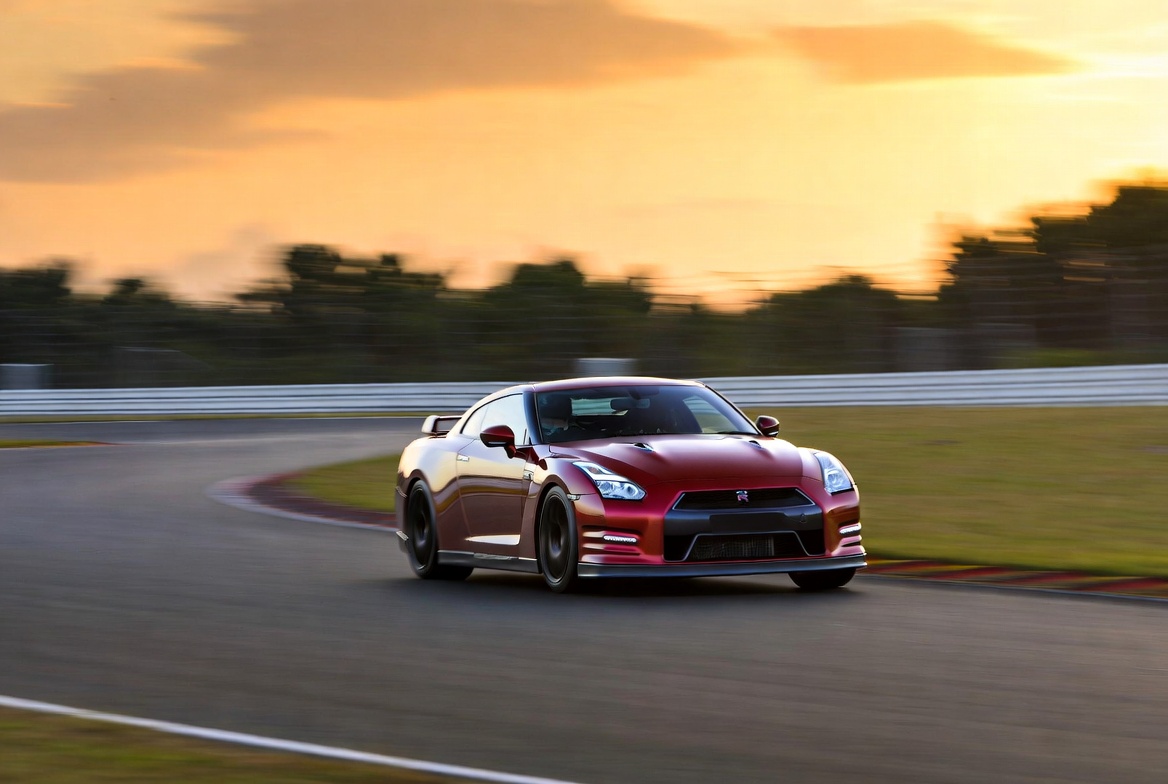
Here’s where the historical analysis pays a real, tangible dividend for anyone driving or considering an R35 in 2026.
Every decision Nissan made between the Proto and the production car has a downstream effect on what you experience behind the wheel — and what you deal with as an owner. The takumi-assembled VR38DETT is a genuinely robust engine when maintained properly. Correct oil specification matters — particularly on early cars — and so do coolant flushes at proper intervals and attention to the water pump’s condition on higher-mileage examples. The engines that become expensive problems are almost always engines that weren’t maintained to spec, or that were subjected to repeated launch control use without keeping gearbox fluid in good condition. The transmission fluid is an under-appreciated maintenance item that the production car’s development specifically highlighted.
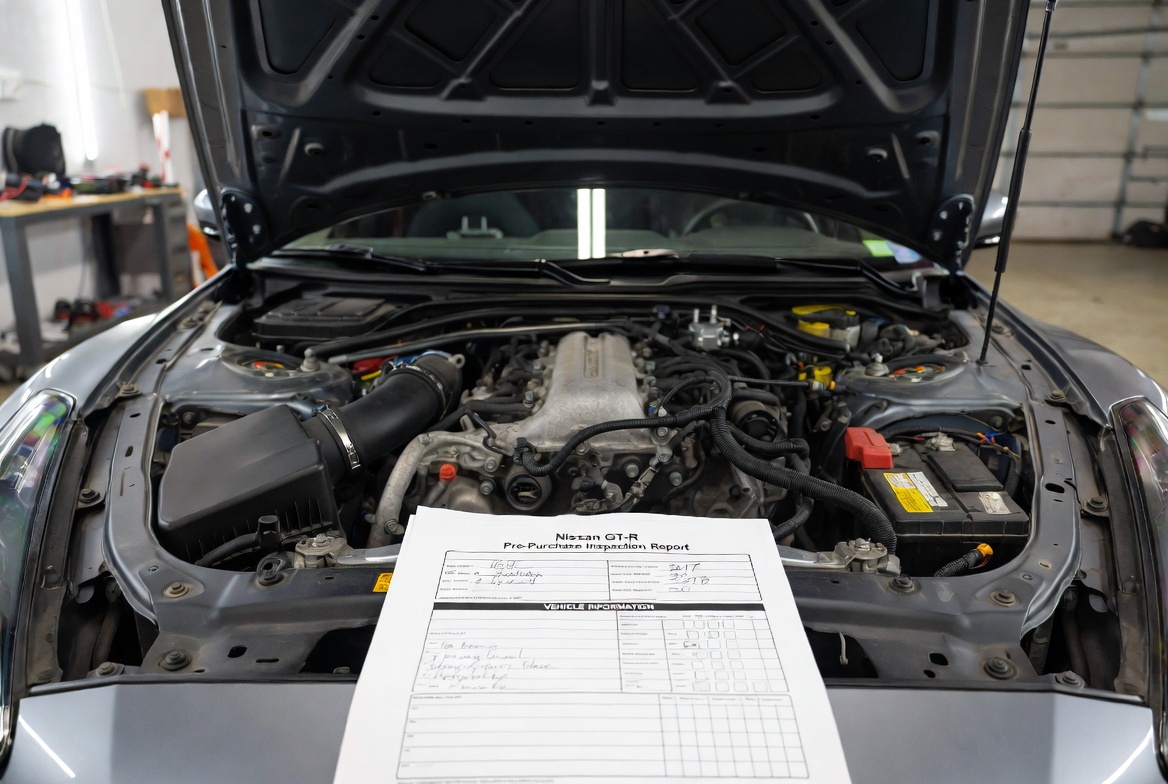
The GR6’s production calibration was good from the start. But early cars — 2009 through 2011 model years specifically — had clutch packs that wore faster under aggressive use than later revisions. Software updates and revised clutch materials, addressable through official calibration updates or reputable aftermarket solutions, resolved most of that on later production runs. If you’re looking at an early car in 2026, verify its service and modification history carefully.
The ATTESA AWD system’s reliability on stock or mildly modified R35s is genuinely impressive — largely because the production calibration was so thoroughly validated during the Proto-to-production development period. Push power significantly higher — into the 600 hp and above territory — and you’re asking components designed around the production output level to handle loads they weren’t engineered for. Know your modification goals before you start modifying.
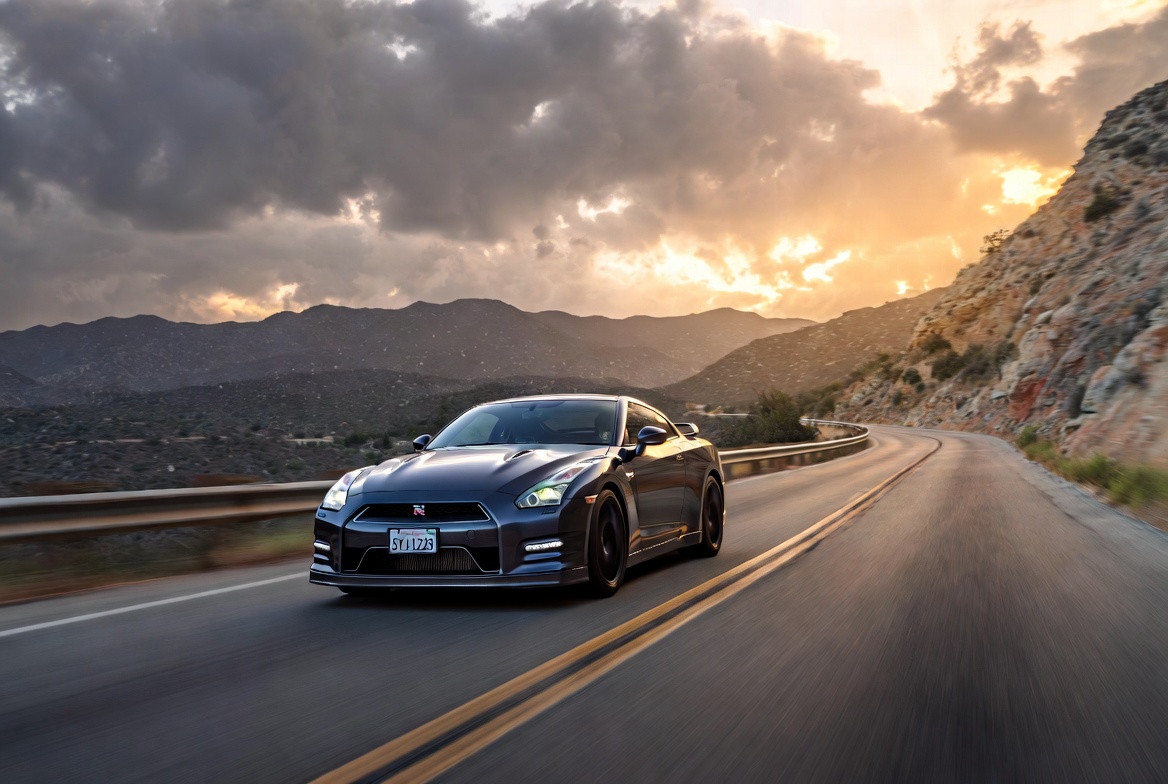
For buyers right now, the chassis refinements Nissan made during that development window mean you’re inheriting a foundation that is still, in 2026, a legitimate benchmark. The multi-link geometry, the rigid subframe, the active aero — these aren’t dated period features. They’re still teaching other manufacturers lessons.
Final Thoughts
Every time I sit in an R35, I think about that 2005 Tokyo hall. The Proto was a promise — a wild, electrifying, almost-too-good-to-be-true promise from a manufacturer that had every reason to play it safe after years away from the GT-R nameplate. They swung for the fences anyway.
What’s extraordinary, looking back with two decades of perspective, is that the production car doesn’t just honor that promise. In almost every measurable dimension — power, chassis precision, aerodynamic efficiency, drivetrain sophistication — it exceeds it. Every refinement, every revised spec, every late-night engineering decision made between Tokyo 2005 and the December 2007 launch was in service of making something genuinely better. Not safer for the brand. Not cheaper to manufacture. Better.
The R35 that exists in 2026, with all its accumulated owner knowledge and engineering updates behind it, is the full realization of what the GT-R Proto was reaching for. The stacked headlights are there. The quad exhaust. The planted, purposeful stance that makes every other car in a parking lot look slightly lazy.
The Proto spirit isn’t something you have to imagine or reconstruct from show photographs.
Every time that GR6 fires a downshift and the VR38 barks back at you, you’re hearing it. It never left.
FAQ
Was the GT-R Proto ever made available for road use or public purchase?
No. The GT-R Proto shown at the 2005 Tokyo Motor Show was a true engineering and design prototype — a functional development vehicle built to demonstrate concept and direction. It was never homologated for road use on public roads and was never offered for sale. The earliest road-legal GT-R is the production R35, which went on sale in Japan in December 2007 as a 2008 model year vehicle.
How close was the GT-R Proto’s engine to the production VR38DETT?
Architecturally close — both used the twin-turbocharged 3.8-liter V6 layout with the same fundamental bore and stroke approach. But the Proto’s development-spec engine was not finalized in terms of turbocharger specification, engine management calibration, assembly process, or final output figures. The production VR38DETT’s takumi hand-assembly method, its dry-sump oiling system, and its final 480 PS / 588 Nm output were all outcomes of the two-year development campaign that followed the Proto’s public debut.
Did Nissan continue updating the R35 after its 2007 launch, or was it essentially unchanged?
The R35 has been continuously developed since launch. Significant milestones include the limited 2010 SpecV edition with carbon ceramic brakes and weight reduction, the 2012 facelift with revised front fascia styling and output increases to 550 PS for JDM specification, subsequent model year updates improving transmission durability, interior quality, and in-car technology, and the Nismo versions that push output well above 600 PS. The fundamental platform architecture and drivetrain layout established during the Proto-to-production development period has remained constant throughout all of these updates.
Is the original GT-R Proto preserved and can enthusiasts see it today?
Nissan has retained the original GT-R Proto as part of its heritage collection, and it has appeared at various retrospective automotive events over the years. High-resolution photographic documentation of the Proto exists in considerable detail across enthusiast archives and official Nissan historical materials. For anyone wanting to study the design evolution firsthand, cross-referencing show photography with production R35 body panels reveals the specific development changes with striking clarity — and makes the engineering story told in this article genuinely visible.