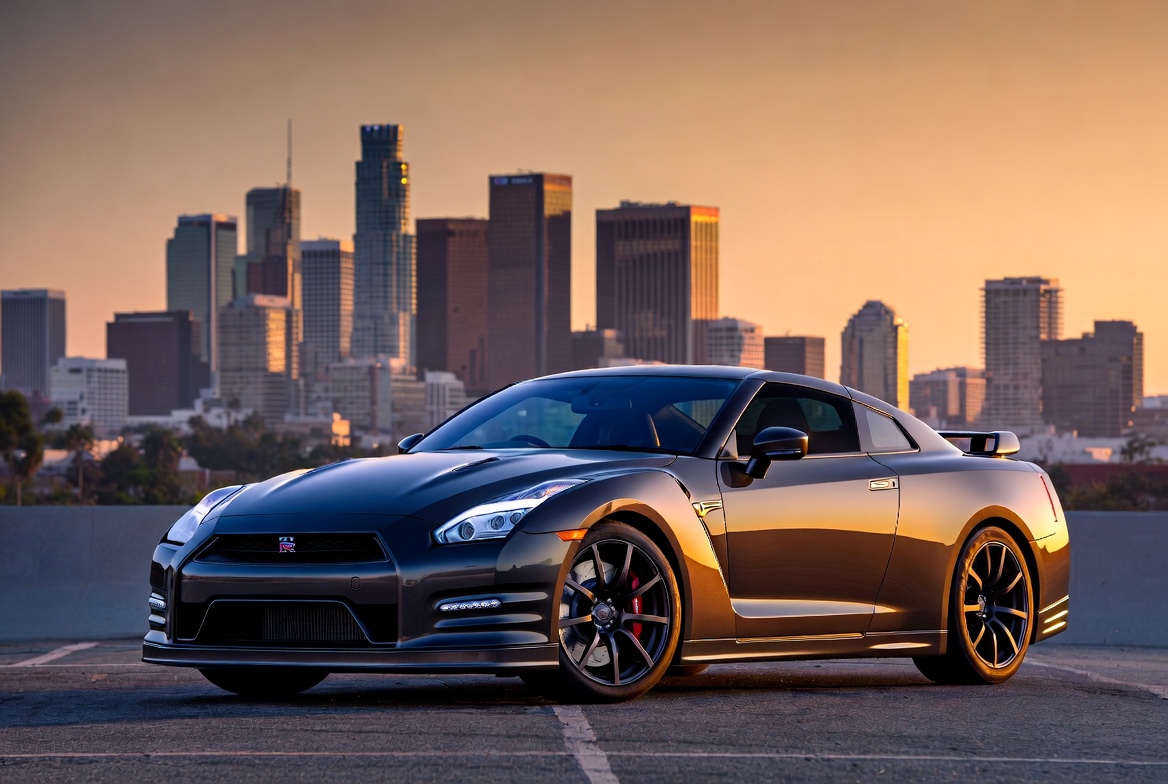
The used performance market in 2026 is no longer a simple contest between Japanese icons and European supercars. Chinese electric performance cars have moved from curiosity to serious export inventory, and buyers in Africa, South America, the Middle East, and CIS markets are asking more detailed questions. Should they import a used Nissan GT-R with a proven global reputation, or a newer Chinese performance EV with modern technology and lower routine maintenance? The answer depends on the buyer's use case, market, budget, service network, and expectations. A clean R35 GT-R is still one of the most recognizable performance cars ever built. It carries the Proto bloodline, the VR38DETT engine, ATTESA all-wheel drive, and a tuning culture that reaches almost every serious car market. A Chinese performance EV, by contrast, may offer instant torque, newer software, a quieter cabin, and an ownership experience that feels more modern to non-enthusiast buyers. For exporters, the real opportunity is not choosing one side. It is learning how to explain both. A dealer who understands used performance cars from China can position the GT-R as a halo product while also presenting Chinese EVs as practical, fast, and high-value alternatives.
Buyer Psychology: Heritage or Technology
A GT-R buyer usually wants more than speed. They want the story. They want the car that shocked the supercar world, the machine that combined Japanese engineering discipline with everyday usability, and the badge that still turns heads in any country. For many buyers, especially enthusiasts in developing import markets, the GT-R is not just transport. It is proof of taste and ambition. A Chinese performance EV buyer may think differently. This buyer often asks about battery range, cabin technology, charging, safety systems, warranty history, and daily operating cost. They may care less about engine sound and more about acceleration, comfort, and modern features. The car is still emotional, but the emotion comes from newness and convenience rather than motorsport heritage. That distinction matters in sales copy, inspection reports, and negotiation. If a buyer dreams of an R35, a fast EV will not fully replace it. If a buyer wants modern speed and low noise, the GT-R may feel too demanding. A good exporter separates these customers early instead of forcing one product to satisfy every type of demand.
Why the GT-R Still Works as Export Inventory
The R35 GT-R remains attractive because its reputation is already built. Buyers do not need a long explanation of why the car matters. They may need help understanding model years, service records, gearbox condition, and modification history, but the brand value is clear. That makes the car especially useful for dealers who want premium showroom attention. In many markets, a GT-R can create leads even when it is not the fastest-selling unit. It pulls enthusiasts into conversation. It gives a dealership social media value. It helps a business look capable of sourcing serious cars, not only ordinary sedans and SUVs. A single clean GT-R can improve the image of an entire export inventory. The challenge is risk control. A GT-R must be bought carefully. The gearbox, engine service history, accident record, tire condition, brake condition, and tuning quality all affect real value. An exporter should never present an R35 like a normal used sedan. It needs a specialist inspection mindset.
Where Chinese Performance EVs Have the Advantage
Chinese EVs are powerful because they make speed easier to own. Models like the Zeekr 001 show why the segment is growing: strong acceleration, practical body styles, modern cabins, and attractive prices compared with many legacy performance cars. Buyers researching a used Zeekr 001 may not be traditional GT-R fans, but they are still performance-minded customers. EVs also simplify some maintenance conversations. There is no engine oil, turbo plumbing, exhaust system, or combustion gearbox service. That does not mean they are risk-free. Battery health, software support, accident repair, charging compatibility, suspension wear, and tire cost still matter. But for a buyer who wants fast daily transport, the EV ownership story can feel cleaner. Exporters should be careful with charging assumptions. A Chinese EV may be excellent in a large city with good charging access, but less suitable for rural regions or countries with limited infrastructure. The car's appeal depends heavily on destination-market reality.
Inspection Differences
A used GT-R inspection is mechanical and historical. You want oil records, GR6 transmission service, differential fluid history, launch-control data where possible, ECU fault scans, modification invoices, accident checks, and underbody inspection. The best R35 examples are not always the lowest-mileage cars. They are the cars with clear records and careful owners. A Chinese EV inspection is more digital and structural. You want battery state, charging behavior, software language options, ADAS function, thermal management, accident repair quality, suspension condition, tire wear, and service platform access. If the car was repaired after a collision, battery pack safety and high-voltage system checks become essential. Both inspections require discipline. The mistake is assuming that an EV is automatically simple or that a GT-R is automatically risky. Good cars exist in both categories, and bad cars exist in both categories. The exporter's job is to identify which is which before the vehicle leaves the origin market.
Pricing and Resale Logic
GT-R pricing is supported by scarcity, reputation, and enthusiast demand. Clean, documented cars can hold value because buyers recognize them quickly. Special trims, low-mileage examples, tasteful modifications, and rare colors may command stronger prices. However, poor records or unknown tuning can reduce value sharply. Chinese performance EV pricing is driven more by age, battery confidence, feature set, and market familiarity. A buyer may compare a performance EV against a family crossover or premium sedan rather than against a classic performance car. This makes value more fluid. Newer Chinese models can depreciate as updated versions arrive, but their starting price may still be very competitive. For a buyer comparing performance with practical EV utility, resources such as BYD Sealion can help frame the wider Chinese new-energy market. The GT-R is the emotional purchase. The EV or plug-in hybrid is often the rational purchase with a performance bonus.
Market Fit by Region
In CIS countries, the GT-R has strong enthusiast recognition and a mature tuning culture in many cities. Chinese EVs are also gaining attention, especially where charging access and Chinese-brand familiarity are improving. Both can work, but the buyer pool is different. In African markets, the GT-R is usually a premium niche vehicle. It can sell to wealthy enthusiasts, collectors, and social-media-focused buyers, but service access must be considered. Chinese EVs may be promising in major cities but less suitable where charging networks are weak. Plug-in hybrids may sometimes be a better bridge product. In South America, import rules and taxes can strongly affect the decision. A GT-R may be desirable but expensive to land. A Chinese EV may face its own compliance and charging questions. Exporters should calculate landed cost and after-sale support before recommending either option.
Best Sales Strategy for Export Dealers
Do not market the GT-R and Chinese performance EVs as enemies. Market them as two solutions for two kinds of buyers. The GT-R is for the customer who values heritage, mechanical character, tuning culture, and status. The EV is for the customer who wants modern performance, technology, comfort, and easier daily use. A smart listing should include clear photos, honest inspection notes, service history, shipping options, and realistic ownership advice. Buyers trust sellers who explain tradeoffs. A GT-R listing should not hide maintenance needs. An EV listing should not hide charging and battery questions. If a buyer is uncertain, ask what they want the car to do every week. Weekend excitement points toward the GT-R. Daily silent speed points toward the EV. Resale visibility may favor the GT-R in enthusiast circles. Newer technology may favor the EV in urban markets.
Final Recommendation
For export buyers in 2026, the used Nissan GT-R is still the stronger emotional product. It has global recognition, mechanical depth, and long-term enthusiast value. A good example can be a profitable and reputation-building vehicle for the right importer. Chinese performance EVs are the stronger modern-value product. They can deliver speed, comfort, technology, and lower routine maintenance in one package. They may be easier to recommend to buyers who want performance without the responsibilities of a combustion icon. The best dealers will not choose one permanently. They will stock and explain both intelligently, using the GT-R to attract passion and Chinese EVs to capture the new generation of performance buyers.